

Hesed- God’s Loyal, Steadfast, Covenant Love

The Hebrew word “hesed” is crucial to the theme of the book of Ruth.
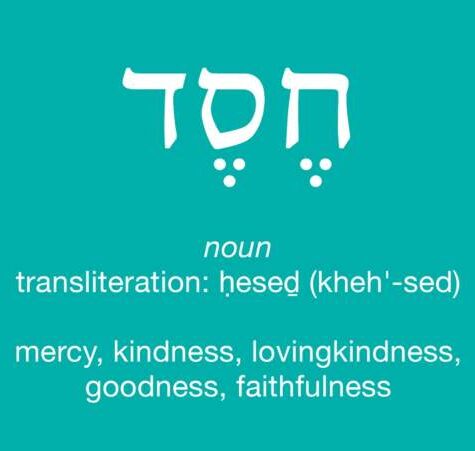
This word is translated in a variety of ways in English translations. Faithfulness, steadfast love, and lovingkindness are a few of the phrases used. Hesed describes the unending, unfailing love which God has for his people. Here are some aspects of God’s loving kindness which are emphasized in the scriptures:
Two-thirds of the references of hesed in the Old Testament speak of God’s love towards humans. One scholar noted that hesed is “a characteristic of God rather than human beings; it is rooted in the divine nature.” In Exodus 34:6-7, God describes himself to Moses,
“The LORD, the LORD, a God merciful and gracious, slow to anger, and abounding in steadfast love and faithfulness, keeping steadfast love for thousands, forgiving iniquity and transgression and sin…”
The term “steadfast love” is God’s hesed, his love towards his people. We do not deserve His love. It is God’s love which is willing to forgive our sins and initiate relationship with us.
God’s steadfast love (hesed) is based on relationship. Hesed correlates to the concept of covenant– specifically between God and his people.
In Genesis 39:21, “But the LORD was with Joseph and showed him steadfast love and gave him favor in the sight of the keeper of the prison.” Here is an example of God’s loyal love, or hesed. Potiphar’s wife falsely accused Joseph of making advances towards her. God gave Joseph favor with the jailer, not just because of Joseph’s integrity. Also by preserving Joseph, God was keeping the promises of the covenant God had made with Abraham, Isaac, and Jacob. God was preparing Joseph to be in a position of influence. Later Jacob’s sons needed to go to Egypt and obtain food. Joseph was there to help because of God’s intervention.
God’s steadfast love is not only an emotion, but it is an intentional act.
Hesed implies an act of kindness involving sacrifice to meet a tangible need. This kind of love is not just “doing a favor” to someone, but it is demonstrating love in order to deliver someone from a problem or state of danger. Psalm 25:7 reads, “Remember not the sins of my youth or my transgressions; according to your steadfast love remember me, for the sake of your goodness, O LORD!” We ask for the forgiveness of our sins on the basis of God’s steadfast love. God is not obligated to forgive. God chooses to forgive and saves us from hell.
The intentional choice to love someone who is in desperate need is what makes the word hesed so unique, especially in the book of Ruth.

Ruth returns from gleaning in the field of Boaz. With excitement, Naomi exclaims, “May he be blessed by the LORD, whose kindness has not forsaken the living or the dead!” Naomi also said to her, “The man is a close relative of ours, one of our redeemers” (Ruth 2:20). Naomi attributes the kindness of Boaz to the LORD. God has not forgotten Naomi and Ruth. He has provided the possibility of a kinsman-redeemer who can help their family survive.
In summary, the word hesed describes God’s great love for his people. Hesed describes a love that is loyal, steadfast, compassionate beyond measure, and unending.
Steadfast love describes God’s everlasting commitment to those who trust him by faith. Since God loves us so deeply, hesed is a model for our love for one another. Based on our union with Christ, we reflect God’s love. When we act in love toward one another, we mirror the love of Christ.
Christians have the Holy Spirit in order to be God’s witnesses. We witness through words and actions to to those who do not yet believe. We serve other Christians by “doing hesed.” As Easter approaches, Thank God for his great love toward you in Christ. Think about different ways that you can practice hesed towards others. Ask God for insight and wait with expectation to see how he directs you!
“But God, being rich in mercy, because of the great love with which he loved us, even when we were dead in our trespasses, made us alive together with Christ—by grace you have been saved—”
Ephesians 2:4-5 ESV